Miniature AI Photo Editing Prompts ChatGPT 2026
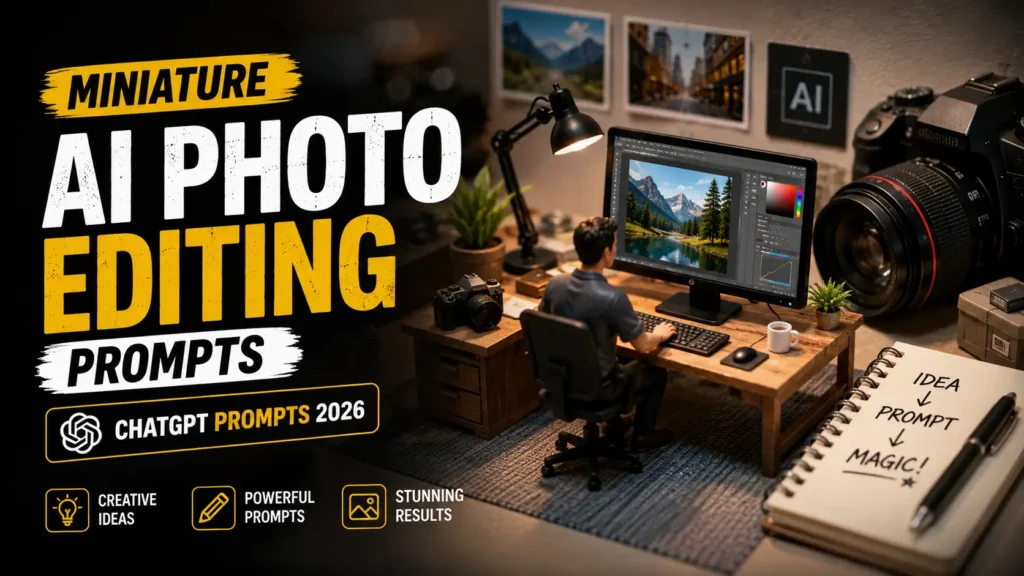
Miniature AI photo editing has become one of the most creative digital art trends in 2026. This unique editing style transforms normal portraits and environments into tiny cinematic worlds filled with toy-like characters, miniature workers, small-scale cities, and hyper-detailed micro scenes. Social media creators are using these AI-generated visuals to produce eye-catching content for Instagram, TikTok, Pinterest, and YouTube Shorts.
Unlike traditional editing styles, miniature AI editing creates the illusion that real people, objects, or environments have been transformed into tiny-scale cinematic worlds. The effect combines realistic depth, macro photography aesthetics, shallow depth of field, dramatic lighting, and highly detailed environmental storytelling.
With the help of ChatGPT, creators can generate advanced prompts for AI image generators like Midjourney, Leonardo AI, and Stable Diffusion. These tools understand cinematic composition, miniature scale simulation, realistic shadows, and macro photography effects far better than older editing systems.
This editing trend is becoming extremely popular because it creates imaginative visuals that feel realistic, cinematic, and playful at the same time.
What is Miniature AI Photo Editing?
Miniature AI photo editing is a visual style where ordinary environments or portraits are transformed into tiny-scale cinematic scenes. The AI creates the illusion that people, buildings, vehicles, or objects are miniature models placed inside a realistic world.
The effect is inspired by:
Instead of normal portrait editing, miniature AI visuals focus heavily on environmental detail, realistic scale simulation, and cinematic composition.
Popular miniature editing concepts include:
The result feels artistic, immersive, and visually unique.
Why Miniature AI Portraits Are Trending in 2026
Miniature AI editing has exploded in popularity because it combines creativity with realistic cinematic effects. Modern audiences enjoy visually imaginative content that tells a story instantly.
Social media algorithms also favor highly detailed visuals because they increase watch time and engagement. Miniature scenes naturally attract attention because viewers explore the tiny environmental details inside the image.
Another major reason behind the trend is the advancement of AI rendering technology. Modern AI systems now understand:
This makes AI-generated miniature worlds look highly realistic.
Creators are also using miniature editing for:
Best Miniature AI Photo Editing Prompts
Miniature Construction Scene Prompt
Tiny City Portrait Prompt
Miniature Food World Prompt
Fantasy Miniature World Prompt
These prompts work exceptionally well with Midjourney and Leonardo AI.
How to Write Better Miniature AI Prompts
Strong miniature prompts focus heavily on environmental storytelling and scale realism. Instead of only describing the subject, creators should explain the entire miniature world.
The best prompt structure usually follows this format:
Subject + Miniature Scale + Environment + Lighting + Camera Style + Texture + Rendering Quality
Macro photography terms significantly improve realism. Important phrases include:
Lighting also plays a huge role in creating believable miniature worlds. Warm cinematic lighting and realistic shadows help scenes feel immersive.
Trending Miniature AI Styles in 2026
Miniature AI editing continues evolving rapidly, and several styles are dominating social media this year.
Cyberpunk miniature cities are extremely popular because they combine futuristic architecture with cinematic neon lighting.
Miniature construction scenes are another viral trend. These visuals often show tiny workers repairing giant everyday objects like watches, phones, keyboards, or cameras.
Popular miniature styles include:
These styles create visually unique content that performs extremely well on social media.
Common Mistakes in Miniature AI Editing
Many beginners struggle with miniature editing because they ignore realistic scale perception.
One common mistake is using environments that feel too empty. Miniature scenes need rich environmental details to feel believable.
Another issue is weak depth-of-field effects. Macro photography aesthetics are essential for creating realistic miniature illusions.
Creators should also avoid:
Balanced cinematic composition usually produces the best results.
Common Mistakes in Miniature AI Editing
Conclusion
Miniature AI Photo Editing Prompts ChatGPT 2026 represent one of the most creative trends in modern AI-generated art. These cinematic tiny-world visuals combine macro photography aesthetics, environmental storytelling, realistic textures, and advanced AI rendering to create visually stunning miniature scenes.
With tools like ChatGPT, creators can generate detailed prompts for Midjourney, Leonardo AI, and Stable Diffusion to create highly engaging cinematic artwork.
Whether you prefer futuristic miniature cities, fantasy worlds, toy-style portraits, or tiny construction scenes, the key lies in environmental detail, cinematic lighting, realistic scale simulation, and strong prompt engineering.
As generative AI continues advancing, miniature AI editing will remain one of the most visually imaginative trends shaping the future of digital creativity.