ChatGPT 3 Layer AI Photo Editing Prompts 2026
ChatGPT 3 layer photo editing prompts are becoming one of the most viral editing trends in 2026. This editing style is changing the way creators design portraits for social media, cinematic artwork, gaming profiles, and aesthetic photography. Instead of simple photo filters or normal color adjustments, layered cinematic editing focuses on creating a complete visual atmosphere around the subject.
Modern creators want their photos to feel emotional, dramatic, and professionally designed. That is why cinematic layered edits are growing rapidly across Instagram, Pinterest, TikTok, and YouTube. A powerful 3 layer portrait can instantly grab attention because it combines cinematic lighting, atmospheric backgrounds, and visual effects into one premium composition.
This editing style is now widely used for:
The biggest advantage of layered editing is depth. Normal images often look flat, while layered edits create a sense of realism and storytelling that feels immersive and visually rich.
What Is 3 Layer Photo Editing?
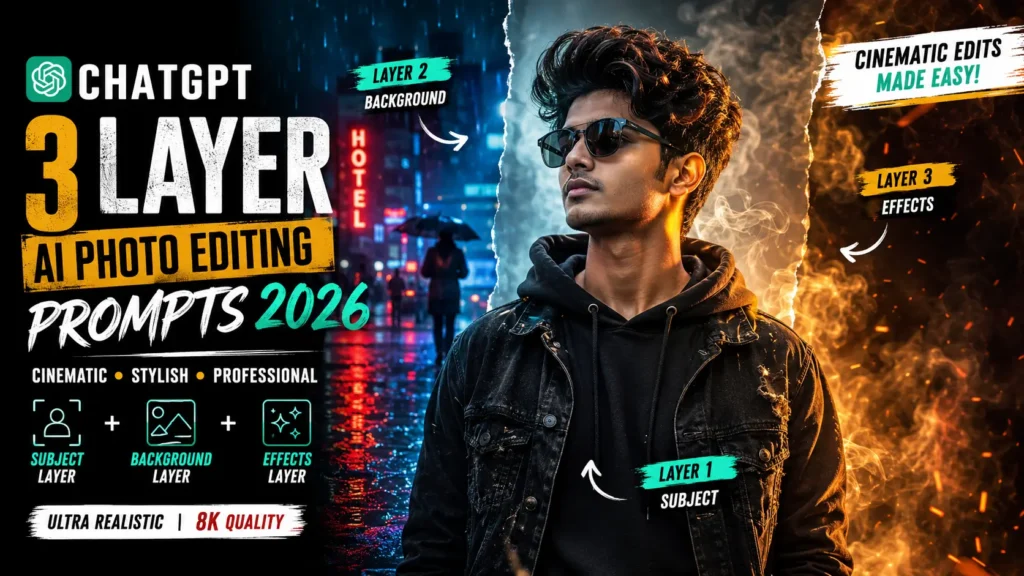
3 layer photo editing is a creative editing technique where three visual components are combined together to produce a cinematic final image. Each layer adds something unique to the portrait, making the image more dynamic and professional.
The first layer is the main portrait layer. This includes the subject, facial expression, pose, and overall composition. A sharp and well-lit portrait always creates a stronger base for editing.
The second layer is the cinematic background layer. This layer builds the environment around the subject. It can include rainy streets, futuristic neon cities, dark textured walls, sunsets, smoke-filled scenes, or urban nightlife aesthetics.
The third layer is the visual effects layer. This includes cinematic enhancements such as:
These elements make the portrait feel alive and cinematic.
When all three layers blend smoothly together, the final image looks like a movie poster or premium editorial photoshoot.
Why 3 Layer Editing Is So Popular
The reason layered editing is becoming so popular is because modern audiences prefer cinematic visuals over ordinary photos. Social media platforms are highly competitive, and creators constantly look for ways to make their content stand out.
A cinematic layered portrait immediately attracts attention because it feels more artistic and immersive. Instead of looking like a simple photo, it feels like a complete visual story.
Another major reason behind the popularity of this editing style is versatility. Layered editing works perfectly for many themes and moods. You can create emotional rain portraits, futuristic cyberpunk edits, luxury fashion aesthetics, dark cinematic posters, or dreamy sunset visuals while still using the same layered editing concept.
This flexibility makes the style extremely useful for creators across different niches. Also try: Aesthetic Cartoon AI Photo Editing Prompts.
How to Write Better Layered Editing Prompts
A strong prompt is extremely important for cinematic editing. Simple prompts often create flat or incomplete visuals, while detailed prompts generate more realistic and professional results.
The best layered editing prompts describe:
The ideal prompt structure is:
Subject + Background + Effects + Lighting + Atmosphere + Quality
Example Prompt
“A stylish young man standing in heavy rain, neon reflections on wet streets, cinematic smoke overlays, dramatic blue lighting, emotional atmosphere, shallow depth of field, ultra realistic, movie-poster aesthetic, 8K quality”
This type of prompt creates much richer cinematic output.
Best ChatGPT 3 Layer Photo Editing Prompts
Cinematic Rain Prompt
Cyberpunk City Prompt
Golden Hour Prompt
Dark Moody Prompt
Smoke Effect Prompt
Tips for Better 3 Layer Photo Editing
Creating cinematic layered edits becomes much easier when you focus on balance and atmosphere instead of adding too many effects at once.
Here are some important tips that improve editing quality:
Another useful tip is to focus on storytelling. A cinematic portrait should create emotion instead of looking random. Backgrounds, lighting, and effects should support the mood of the image.
For example, rainy environments work better with emotional expressions, while neon cyberpunk scenes work well with stylish fashion poses.
Common Issues in 3 Layer Editing
Many beginners face problems while creating layered cinematic edits. Most issues happen because too many effects are added without visual balance.
One common issue is over-editing. Excessive smoke, glow, blur, or color saturation can make the image look unrealistic and messy.
Another major problem is inconsistent lighting. If the subject has warm lighting but the background uses cool neon tones, the image may feel unnatural.
Low-quality background images can also reduce realism. Cinematic editing works best when all visual elements have similar quality and sharpness.
Some creators also make the mistake of using too many colors together. Strong cinematic edits usually focus on one or two dominant color tones instead of mixing everything.
Common mistakes include:
Fixing these issues creates cleaner and more professional-looking portraits.
How Color Grading Improves Cinematic Editing
Color grading plays a huge role in cinematic visuals. Even small color adjustments can completely change the mood of the portrait.
Popular cinematic color styles include:
Professional color grading helps the image look more polished and immersive.
Best Platforms for Layered Cinematic Edits
These cinematic portraits are highly effective on visual-focused platforms.
Popular uses include:
Because these edits look premium, they often receive higher engagement.
Why Cinematic Layered Editing Will Keep Growing
Cinematic portrait editing is becoming more advanced every year. Audiences now prefer emotional and movie-like visuals instead of plain photographs.
Future editing trends will likely include:
This is why layered editing is expected to remain one of the biggest creative trends in digital photography and portrait design.
Conclusion
ChatGPT 3 layer AI photo editing prompts allow creators to design highly cinematic and visually powerful portraits with dramatic lighting, atmospheric backgrounds, and professional effects. Whether you prefer rain aesthetics, cyberpunk themes, golden-hour portraits, or dark moody visuals, layered editing helps transform ordinary photos into premium cinematic artwork.
In 2026, layered editing is no longer just a trend. It has become a modern visual style that combines storytelling, atmosphere, and cinematic creativity into one immersive portrait experience.