Boys Car AI Photo Editing Prompts 2026 | Real Images
Car culture and boys have always been the perfect match. A clean Lamborghini parked under city lights, a stanced Skyline on a foggy highway, or a Hellcat sitting low in a parking garage these shots pull massive engagement every single time.
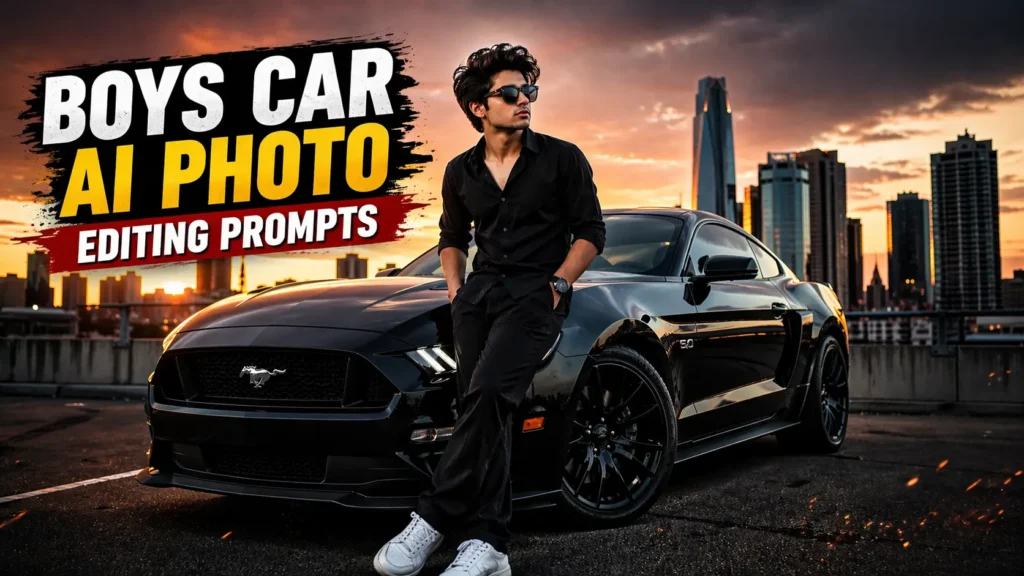
The real problem? Most people cannot afford the car, the photographer, or the location. That is exactly where AI changes everything. With the right boys car AI photo editing prompts, you can produce jaw dropping, photorealistic car lifestyle images from scratch no car, no shoot, no budget needed. Let us show you how to do it right.
What Exactly Is a Boys Car AI Prompt?
A boys car AI prompt is a written description you type into an AI image generator to create a photo of a young man with a car. You tell the AI everything the car model, the location, the lighting, the outfit, the camera angle, and the mood. The AI processes all of that and produces a high-quality, photorealistic image that matches your vision.
Think of yourself as the director of a film shoot. You call the shots, you set the scene, and the AI brings it to life. No car keys required.
Why Everyone Is Using AI for Car Lifestyle Content
Car lifestyle content is one of the highest-performing visual niches on the internet right now. Pages built around car meets, modified builds, night drives, and street culture rack up millions of views and followers. But shooting real car content is expensive, time-consuming, and depends on having access to the right vehicles. AI completely removes those barriers.
Here is what makes AI car prompts such a game changer:
5 Building Blocks of a Killer Car Prompt
A lazy prompt gives you a lazy result. If you want a photo that looks like it belongs on a car magazine cover, you need to build your prompt with five specific layers. We break each one down below.
Pick Your Car and Describe It Fully
Never just say car. Name the exact model and describe how it looks. Try matte black Lamborghini Huracan with aftermarket wheels, widebody Nissan GT-R R34 in midnight blue, or lowered Mercedes C63 AMG with tinted windows and chrome exhaust. The more specific your car description, the more accurate and impressive the result.
Set the Scene With a Strong Location
The location carries the whole story. Strong settings include rain-soaked Tokyo streets at midnight, empty desert highway at golden hour, underground concrete parking structure, rooftop terrace overlooking city skyline, or a winding mountain road wrapped in morning fog. A powerful location turns a basic car photo into a cinematic moment.
Show How the Boy Connects With the Car
The relationship between the subject and the car is everything. Describe it precisely — leaning against the front bumper with arms folded, sitting on the hood staring into the distance, crouching beside the rear wheel, standing behind the open driver door, or sitting inside with one leg hanging out. Also describe the outfit: a black bomber jacket, streetwear fit, or a clean fitted tracksuit all tell very different stories.
Set the Light and Time of Day
Lighting shapes the entire mood of the photo. Use golden hour warmth behind the car, cold blue hour city glow, aggressive midday sun with hard shadows, neon light reflections across wet pavement, headlights cutting through dark fog, or a single studio strobe on a pitch-black background. Each option creates a completely different emotional tone.
Choose Your Shot and Camera Setup
The camera angle and lens choice are what separate phone snaps from magazine spreads. Use low angle wide shot showing full car body, tight cinematic portrait with car blurred behind, three-quarter front angle, overhead drone perspective, or close detail shot on the wheels and exhaust. Pair these with camera references like shot on Canon 1DX, 35mm wide lens, f/2.8, or medium format film aesthetic to push photorealism to the max.
Also Try: Dark Portrait AI Photo Editing Prompts
3 Ready-to-Use Boys Car AI Prompts
We have written three high-performance prompt examples for you. Paste any of these directly into Midjourney, DALL-E 3, or Leonardo AI and watch what happens.
Tokyo Night Street Racer
Desert Highway at Golden Hour
Underground Garage Culture
Which AI Tool Should You Actually Use?
We have put every major AI platform through its paces for car photography content. Here is our honest breakdown of which tool delivers what.
- Midjourney v6: Our top pick for boys car photography. Nobody beats it on car body paint, reflections, lighting realism, and cinematic depth. Start here.
- DALL-E 3 via ChatGPT: Your best bet when you need the AI to follow a very detailed and specific prompt word for word. Great for complex scene descriptions.
- Leonardo AI: The go-to tool when you need the same character across multiple different car backgrounds. Keeps face and style consistent across images.
- Stable Diffusion XL: Built for users who want deep creative control. Pair it with JDM or automotive LoRA models for hyper-detailed car results.
- Adobe Firefly: Best for editing real photos. Add a car behind a real person, swap backgrounds, or enhance lighting in an existing image with Generative Fill.
Tricks That Make Your Prompts Hit Harder
These small additions make a huge difference to your final result. We use all of them every time.
- Always name the exact car year and model 2021 Toyota GR Supra A90 always beats just sports car in accuracy and detail every single time.
- Add wet road reflections to night shots Wet asphalt with neon and headlight reflections is the single fastest way to make a night car photo look cinematic.
- Describe the outfit like a stylist would: Clothes give your subject personality. Saying vintage bomber jacket and slim black jeans tells the AI so much more than just a jacket.
- Shoot low: A low angle ground shot makes any car look enormous, aggressive, and powerful. Add it to almost every outdoor car prompt for instant improvement.
- Layer in atmosphere: Fog rolling across the road, morning mist in the trees, dust behind the wheels, or rain on the windshield adds real life and dimension to your image.
Who Is Actually Creating This Kind of Content?
Boys car AI prompts are being used across the board. Car enthusiasts and page owners use them to fill their Instagram feed with dream car content without owning the vehicles. Young creators use them to build a car lifestyle persona and grow a following from zero.
Automotive and streetwear brands use AI car visuals for campaign content and promotional posts on tight budgets. YouTube creators use them to design high-converting thumbnail art for car review and reaction videos. Even sneaker and fashion brands use the car aesthetic as a backdrop to shoot their products in a powerful, masculine context.
Mistakes That Are Killing Your Car Prompt Results
We see these errors constantly. Avoid all five and your results will instantly improve.
- Writing just sports car: Without a specific make and model the AI guesses and usually gets it wrong. Name it, spec it, and describe the color every single time.
- Forgetting the environment: A world-class car in a plain white void is still a boring photo. The setting carries as much weight as the vehicle itself. Always describe it.
- No connection between boy and car: If the subject just stands near the car with no described interaction, the photo reads as staged and lifeless. Give them something to do.
- Leaving out lighting entirely: Without lighting instructions the AI produces flat, uninspiring results. Even one lighting phrase transforms the entire photo completely.
- Missing the small car details: Wheel style, window tint, body kit, and exhaust tips are what make a car look real. Drop at least two physical car details into every prompt.
Conclusion
You do not need a dream car to create dream car content. Boys car AI photo editing prompts hand you the keys to produce cinematic, scroll-stopping automotive images without a garage, a photographer, or a big budget.